
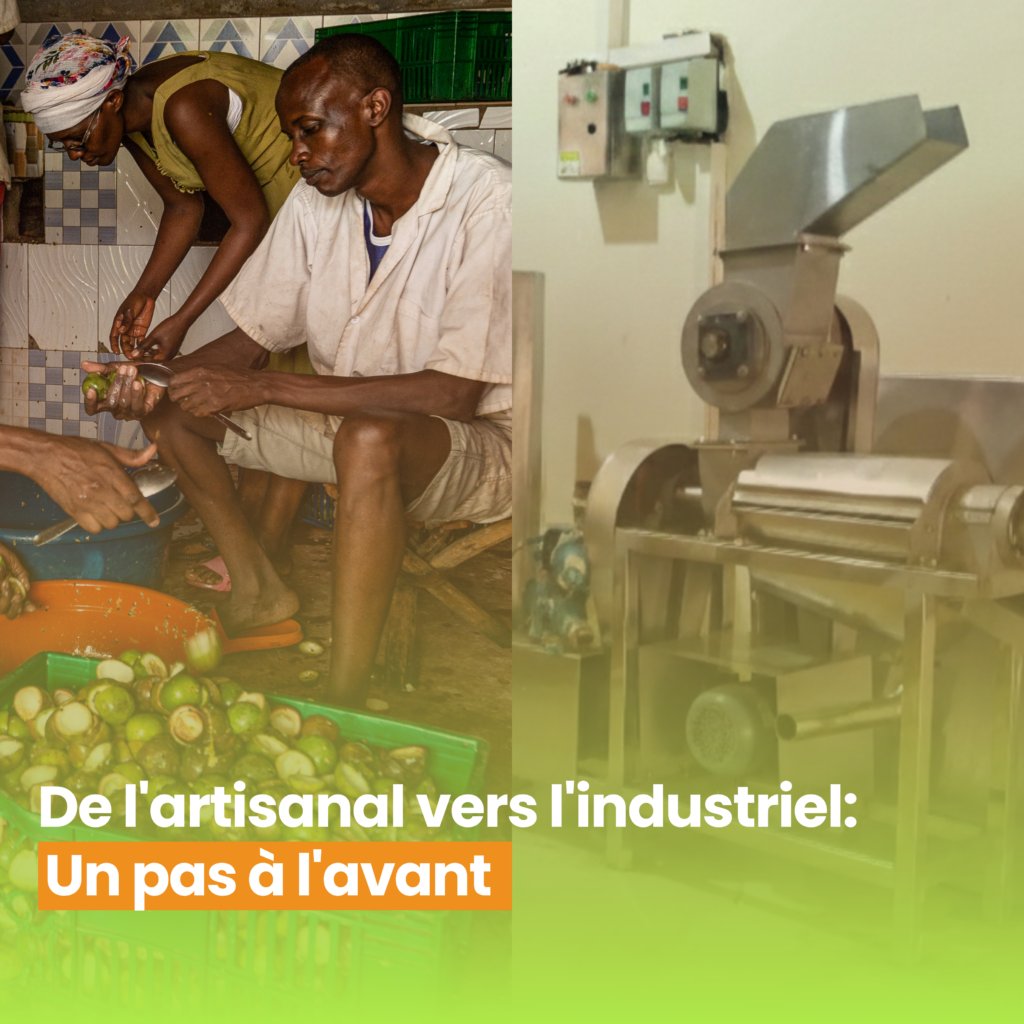
From the informal to the formal sector, from artisanal to industrial production, the journey of the Niko Green processing unit—launched by Niko Seed—is a compelling example of progress. Supported by the Dutch Development Organization SNV, Niko Seed received co-financing from the PADANE Fund, which provided a grant to purchase specialized equipment for the production of passion fruit juice. This transition marks a significant step in the modernization of the business, illustrating the commitment to sustainable processing and economic growth in the agricultural sector.
In a bold initiative aimed at strengthening the local agricultural sector, the Agricultural Development Support Project for Nutrition and Entrepreneurship (PADANE) recently provided financial support to Niko Green. This strategic partnership aims to modernize the processing facility, thereby enabling the company to transition from artisanal-scale production to industrial-scale production.
A sigh of relief can be heard from the young beneficiaries of Niko Seed’s programs at the Niko Green processing facility. From morning to night, they devote themselves to sorting, grading, washing, cutting, scraping, pulping, blending, bottling, and pasteurizing passion fruit juice. Although they are motivated and satisfied with their noble work, these courageous young people work on an assembly line, moving step by step through the process, thereby demonstrating their determination to contribute—whether to support their families or to combat the scourge of unemployment plaguing Burundian society. The process—which is long, slow, and exhausting—is carried out manually due to a lack of specialized machinery and equipment, forcing these young people to perform every step of processing 600 kg of passion fruit per week using traditional methods.
With this funding, Niko Green will be able to purchase specialized equipment capable of processing up to 1,000 kg per day. This represents a significant opportunity to create new jobs and meet growing market demand.
One of the major benefits of this transition is the assurance of impeccable hygiene and product quality. The specialized equipment funded by PADANE will enable more efficient and controlled processing, thereby reducing the risk of contamination. This measure will not only help enhance food safety but also strengthen Niko Green’s reputation as a supplier of high-quality products in the market.
A Shift Toward Industry to Boost Local Employment
Magos Ngabirano, production manager at Niko Green, expresses his enthusiasm for this industrial revolution at his processing plant: “We’ve been operating at this processing plant for about four years. Until now, we’ve had to struggle to meet the standards required by the Burundian Bureau of Standardization (BBN).” By transitioning from an artisanal approach to industrial production, Niko Green is not only increasing its production capacity but also creating new job opportunities within the local community. From production line management to logistics operations, this expansion will generate a growing demand for skilled labor, thereby stimulating the region’s economic development. “Thanks to this co-financing, PADANE is supporting Niko Green’s industrial transformation with the aim of boosting employment and ensuring the quality of agricultural products,” Mr. Ngabirano stated with conviction.
Responding to Growing Market Demand
The transition to industrial-scale production is a crucial step in enabling Niko Green to meet growing market demand more efficiently. Maracuja juices, processed using modern methods and marketed under the NIKO brand, are gaining popularity due to their convenience and consistently high quality. “Nothing can stop us now, because we aspire to become the leaders in the beverage market,” declares Eloi Niyonyishu with determination, a young participant in the food processing training programs offered by Niko Green. Thanks to this investment in specialized equipment, Niko Green will be able to achieve large-scale production while maintaining high standards, thereby meeting consumer expectations and strengthening the company’s market position.
A Partnership for Sustainable Development
This joint initiative between PADANE and Niko Green underscores the crucial importance of public-private partnerships in advancing sustainable development. By choosing to pool their resources and expertise, these two key players demonstrate a deep understanding of the positive impact that such collaborations can have on the local economy and long-term sustainability.
By investing heavily in the modernization of agricultural and food production, PADANE and Niko Green are making a significant contribution to stimulating the local economy. This modernization is not merely a technical transition, but a true driver of economic progress. The creation of new jobs resulting from this initiative strengthens the social fabric and helps reduce the unemployment rate, which is a major concern for Burundian society.
In addition, this partnership aims to ensure high standards of quality and hygiene. Niko Green, with the support of PADANE, is committed to raising the standards of food processing in the region, thereby ensuring food safety for the population while strengthening its reputation as a reliable supplier of quality products.
ID Editorial Team